

When summer comes, we ask ourselves by the pool: which stones can go in water without getting damaged? We first think of the metal — the plating, the chain. We often forget that the stone, too, has its limits.
Some natural stones love water and are not bothered by it at all. Others lose their shine, crack, or fade at the slightest contact with chlorine, salt, or sun. Here is the guide, stone by stone, to enjoy summer without damaging your jewelry.
The essentials in 30 seconds
Two criteria decide everything:the stone's hardness and porosity.
They can go in water:quartz, agate, jasper, tiger's eye — rinse and dry after swimming.
Remove before swimming:turquoise, malachite, lapis, opal, moonstone, freshwater pearl, and mother-of-pearl.
They do not like sun:amethyst, rose quartz, citrine, and aquamarine fade in UV light.
The golden rule:if in doubt, take it off — rinse with clean water, dry it, and store it away from the sun.
Table of contents
Two criteria decide everything: hardness and porosity
Before knowing whether a stone can go in water, two properties give the answer.
- Hardness.Measured on the Mohs scale (from 1 to 10). Above 7, a stone resists scratches and wear well. Below that, it is softer and marks easily.
- Porosity.A porous stone absorbs water, chlorine, salt, and oily substances (cream, perfume). The result: it loses its shine, changes color, or becomes fragile from the inside.
Remember the simple rule: the harder and less porous a stone is, the better it handles water. If in doubt, take it off.
The stones that can tolerate water

Hard (around 7 on the Mohs scale) and non-porous, these stones can take a splash, a summer rain shower, or a short swim without flinching.
- Transparent quartz and smoky quartz
- Agate, jasper, carnelian, onyx (chalcedony family)
- Tiger's eye
- Aventurine
The right reflex is still to rinse them with clean water and dry them after a swim, especially in a pool (chlorine) or in the sea (salt). Avoid prolonged soaking.
Important nuance:colored quartz — amethyst, rose quartz, citrine — handle water very well, but they do not like sun. We’ll come back to that below.
Stones to remove before swimming
Porous, soft, or organic, these do not like chlorinated or salt water. Remove them before diving in.
- Turquoise, lapis lazuli, malachite — porous (and often waxed), they absorb water and become dull. Malachite, which is very soft, also reacts to liquids.
- Moonstone, opal — fragile; opal can absorb water and then crack as it dries.
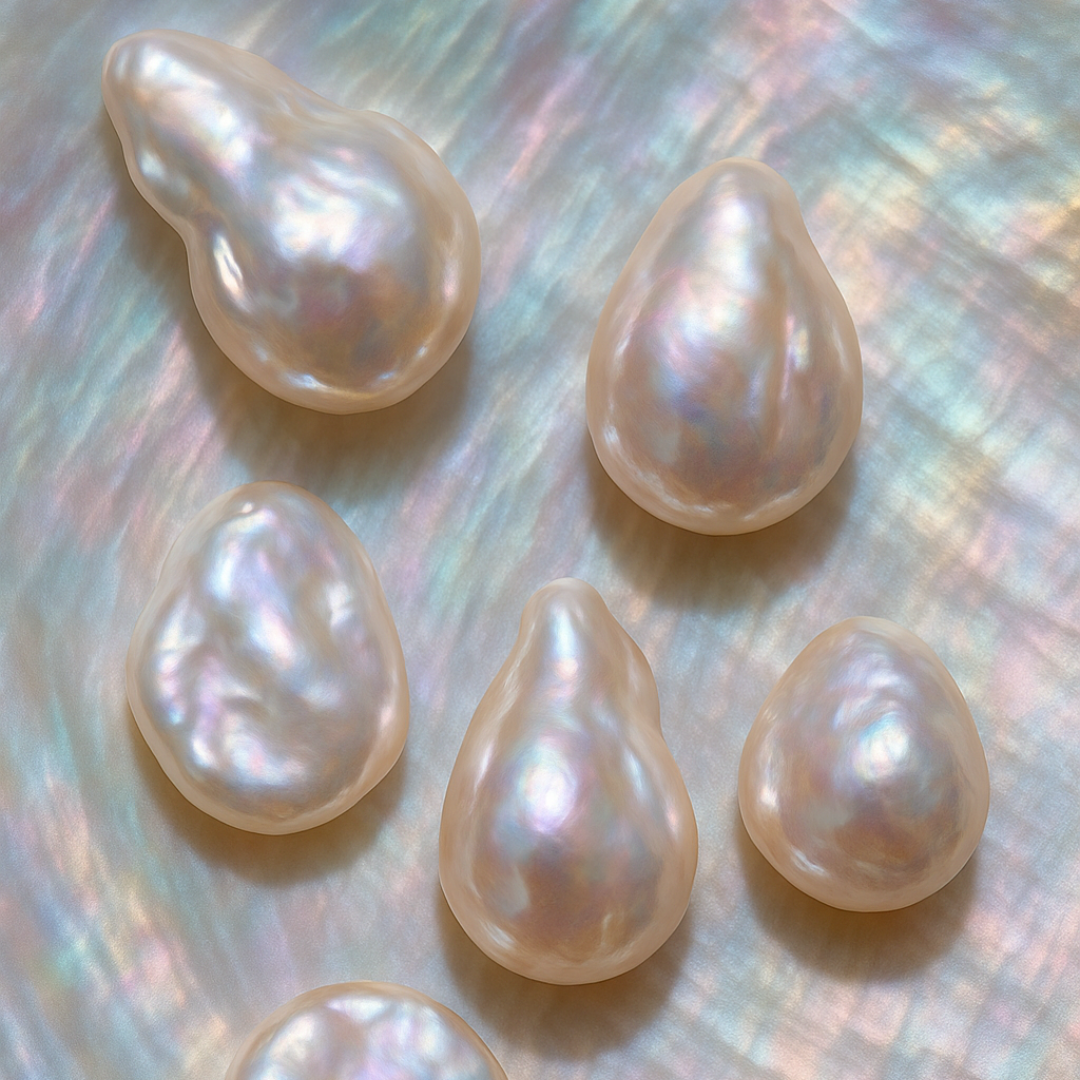
- Freshwater pearl, mother-of-pearl, coral — organic, soft materials: chlorine, salt, sweat, and acids (cream, perfume) damage them over time.
- Amber — a very soft fossil resin, sensitive to products and heat.
- Selenite — never wet it: it literally dissolves on contact with water.
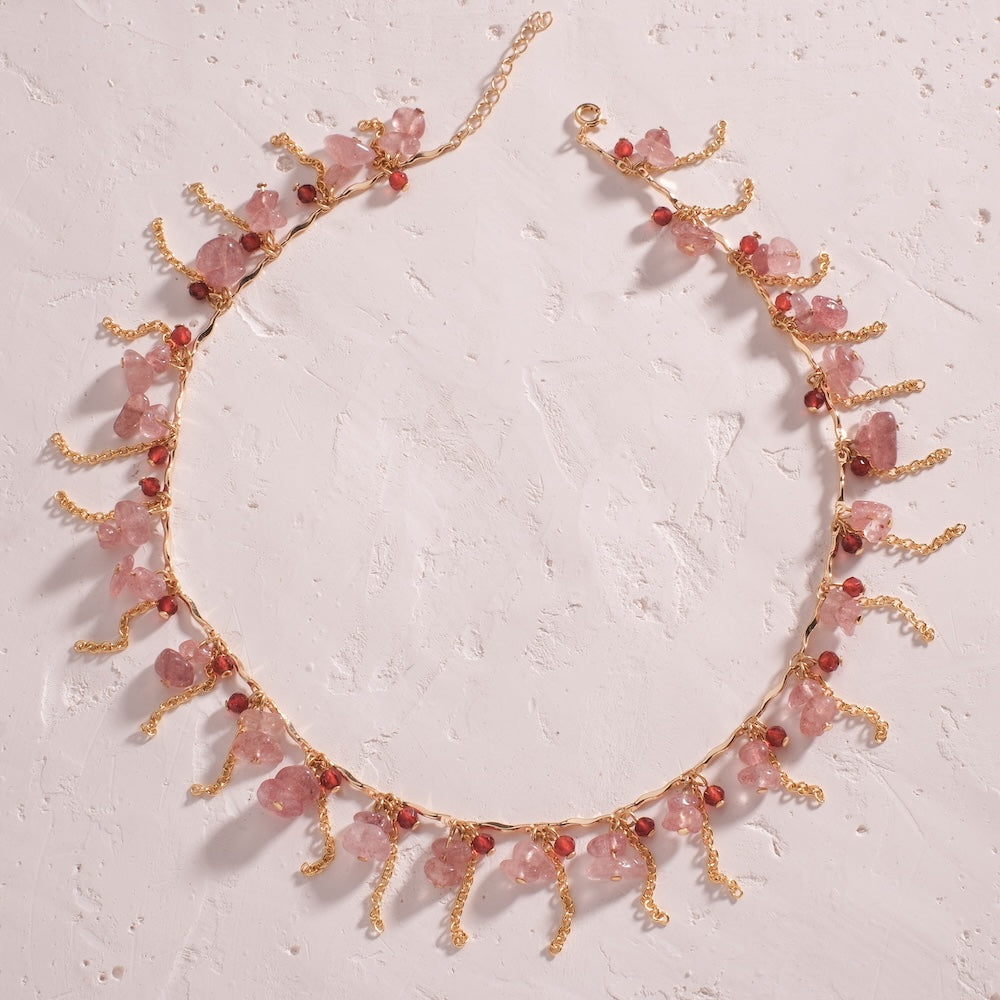
Good to know: a bracelet often combines several stones. It is always the most fragile one that decides — a single sensitive bead is enough to take the jewelry off before going into the water. (Gold-plated brass, too, prefers to avoid chlorine: we'll cover that in a dedicated article.)
Stones that fade in the sun

Water is not the only summer danger. UV rays can fade the color of certain stones, sometimes irreversibly.
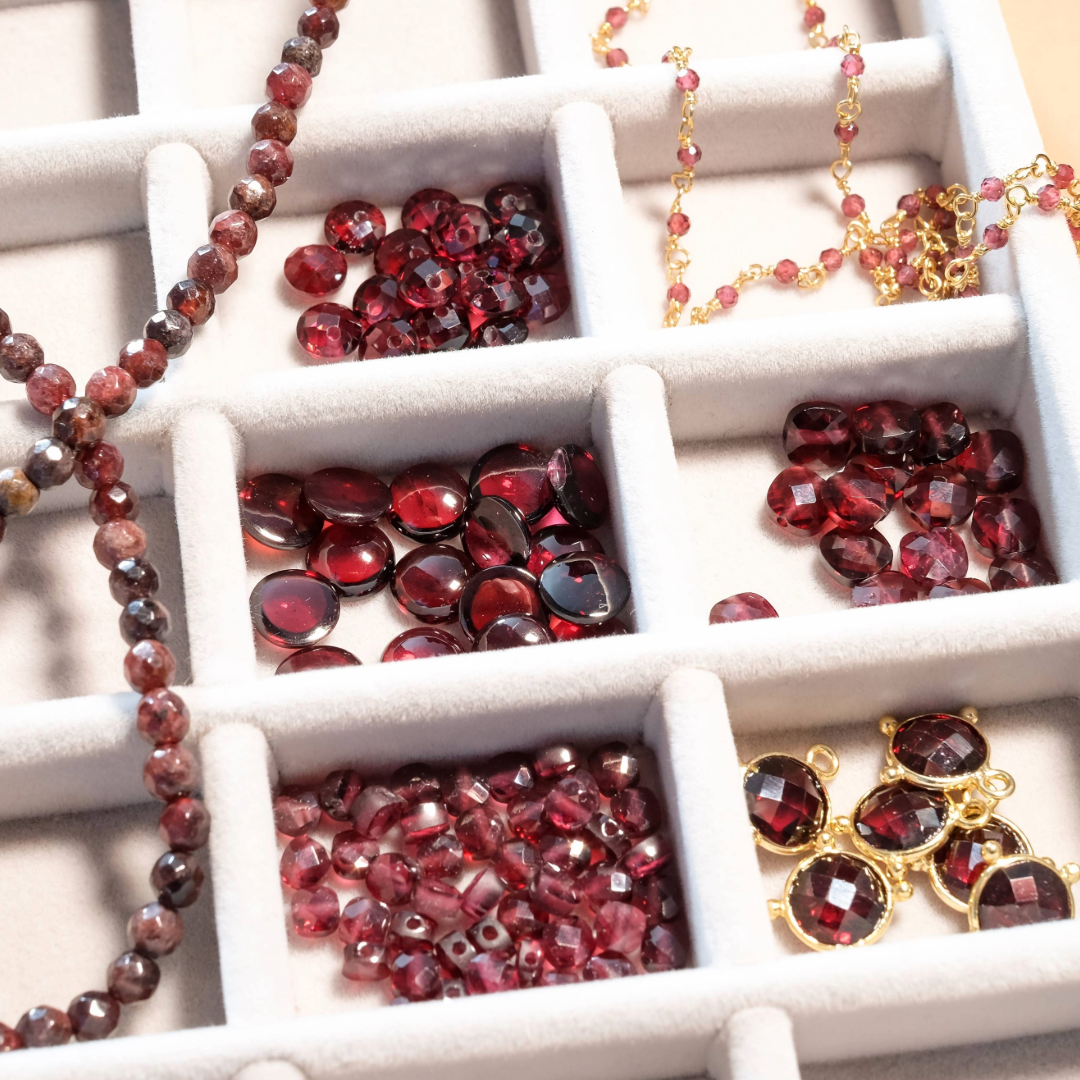
- Amethyst, rose quartz, citrine
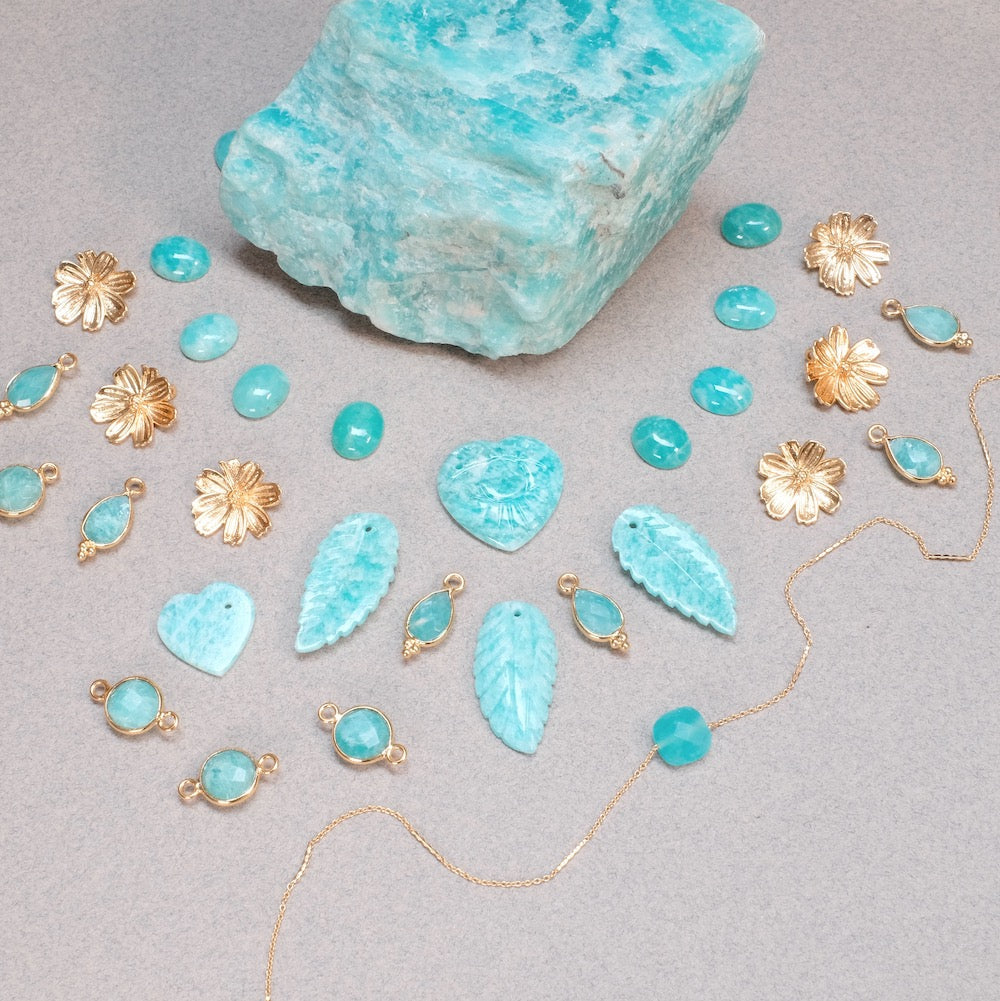
- Aquamarine
- Fluorite (also soft and water-sensitive)
- Kunzite (among the most UV-sensitive)
These stones love water but hate prolonged sun exposure. They are best worn in the evening or in the shade, and stored away from light rather than on a windowsill.
The right habits after swimming
Three simple steps are enough to get your stones through the summer.
- Rinse with clean water as soon as you get out of the water (chlorine and salt are the real culprits), then dry immediately with a soft cloth.
- Store flat, away from sunlight and moisture, ideally in a pouch or box.
- Get dressed before putting on your jewelry: perfume, sunscreen, and monoi go on before the stones, never after.
In short: rinse, dry, put away. And when in doubt, take it off.
Summary table: water and sun, stone by stone

Your frequently asked questions
Can you swim with a bracelet made of natural stones?
It depends on the stones. A bracelet in quartz, agate, or tiger's eye can handle a short swim, provided you rinse and dry it afterward. As soon as it contains a porous or organic stone (turquoise, pearl, opal), it's better to remove it.
Does chlorine damage stones?
Chlorine (pool) and salt (sea) mainly damage porous and organic stones, which they dull or discolor. Hard, non-porous stones resist better, but rinsing with clean water is still recommended.
Which stones are resistant to both water and sun?
Clear quartz, agate, jasper, carnelian, and tiger's eye are the most versatile: hard, non-porous, and light-stable. They are the perfect summer allies.
Can amethyst go in the water?
Yes, amethyst handles water well. On the other hand, it fades in the sun: avoid prolonged UV exposure and store it away from light.
How do you clean a stone jewelry piece after the beach?
Rinse it with clean water (never hot water or product), dry it gently with a soft cloth, then store it flat. For fragile stones, a simple wipe is enough.
When in doubt, take it off
Knowing your stones means keeping them beautiful for longer. The principle can be summed up in one sentence: hard, non-porous stones can tolerate water, while soft, porous, or organic stones should be removed before swimming, and colored stones should be protected from the sun.
Want to put together a summer jewelry piece made to last? Discover our Stone Catalog and come choose your stones in our shop, rue Oberkampf, or at our jewelry-making workshops in Paris 11th.


Kevin, co-founder of Perles Corner
A former professional dancer and stylist, Kevin opened Perles Corner in 2012 with Sébastien, who is certified in Gemology. From their boutique-workshop on rue Oberkampf (Paris 11th), they select stones and jewelry findings with the same high standards: making jewelry creation accessible, without compromising on quality.